


Custom Ecommerce Development vs SaaS: Compared
Key Takeaways
- A traffic drop under 10% in the first 30 days after a redesign is usually normal. Anything beyond that signals a real problem.
- Missing or broken 301 redirects cause the majority of sudden traffic drops after a website redesign.
- Most small businesses should redesign every 2 to 3 years, based on performance signals, not just a fixed calendar.
- SEO planning belongs at the start of a redesign project, not as a cleanup step after launch.
- A documented website redesign checklist covering redirects, content, and tracking prevents almost all of these mistakes.
Common Website Redesign Mistakes to Avoid
We have seen it happen more than once. A business spends weeks perfecting a beautiful new site, launches it, and watches organic traffic fall off a cliff within days. Website redesign mistakes like this are common, and almost all of them are avoidable.
The frustrating part is that the design itself is rarely the problem. The damage usually comes from what happens behind the scenes, missed redirects, lost content, and skipped SEO planning. This guide covers the most common website redesign mistakes to avoid, why they tank traffic and conversions, and a simple checklist to keep your next redesign from becoming an expensive lesson. In one sentence: the biggest website redesign mistake is launching a new site without mapping old URLs to new ones through 301 redirects, which is the single most common cause of lost search rankings and traffic after a redesign. Why Website Redesigns Go Wrong Search engines do not automatically know your new site is the same business as your old one. Every changed URL, removed page, or restructured menu sends a signal, and not always the right one. A small dip in traffic after launch is normal. A drop under 10% in the first 30 days usually recovers on its own as Google re-crawls the site. Anything larger than that points to a real, fixable issue. The Most Common Website Redesign Mistakes to Avoid Most redesign disasters trace back to the same handful of oversights.
- Skipping 301 redirects for URLs that changed during the redesign
- Rewriting or deleting high-performing content without checking what was already ranking
- Restructuring navigation without mapping how old pages map to new ones
- Ignoring page speed in favor of heavier design elements and animations
- Skipping mobile testing before launch, even though most traffic arrives on mobile
- Forgetting to resubmit the XML sitemap to Google Search Console after launch
- Launching without verifying analytics tracking, which hides the real impact for weeks
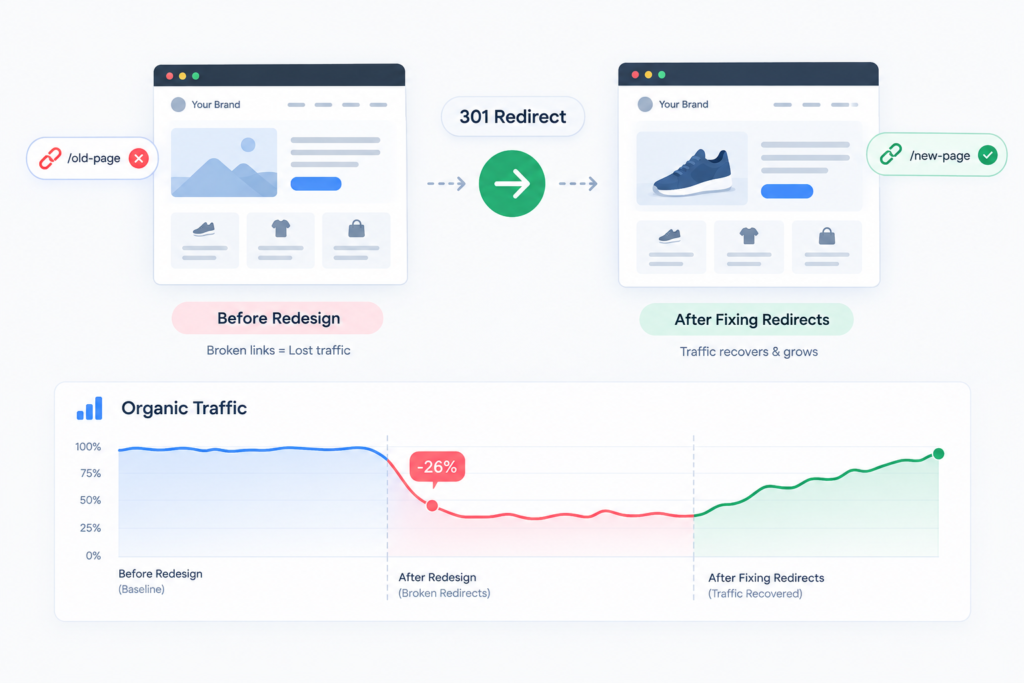
301 Redirects After Website Redesign: Why They’re NonNegotiable A 301 redirect tells search engines and visitors that a page permanently moved to a new URL. Skip it, and both land on a dead end. This is not a small technical detail. One documented case saw a company lose 26% of its year-over-year traffic the month after a redesign and CMS migration, traced directly to unredirected URLs. Once the redirects were fixed, traffic came back and then some.
How to Redesign a Website Without Losing
SEO
Redesigning a website without losing SEO comes down to sequencing.
SEO work belongs before launch, not after.
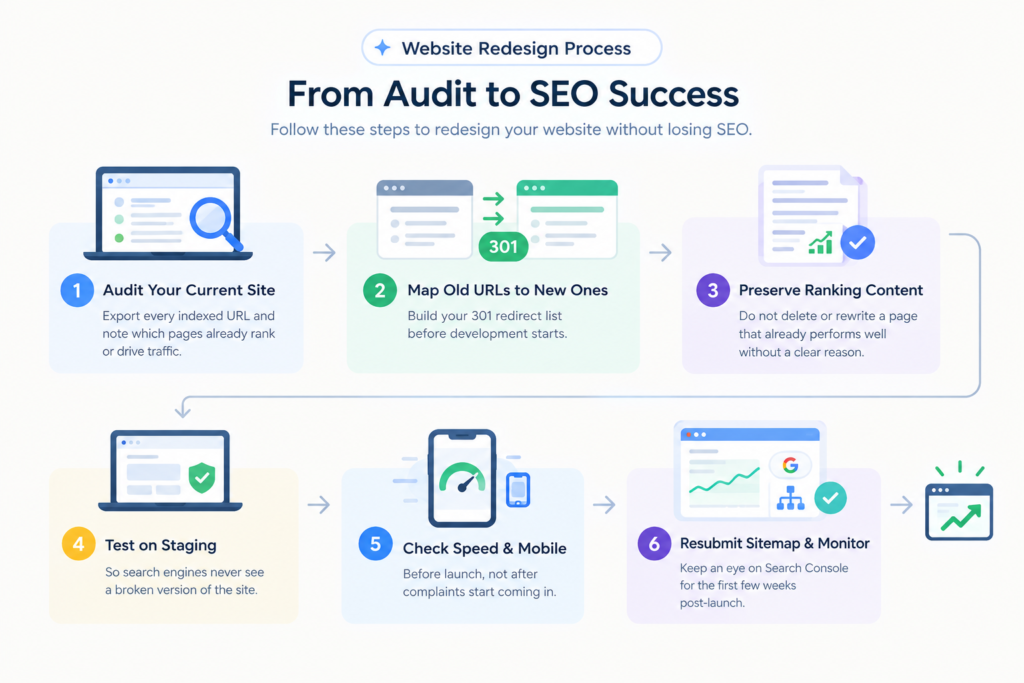
- Audit your current site first. Export every indexed URL and note which pages already rank or drive traffic
- Map old URLs to new ones and build your 301 redirect list before development starts
- Preserve or improve ranking content, do not delete or rewrite a page that already performs well without a clear reason
- Test on staging, not live, so search engines never see a broken version of the site
- Check page speed and mobile rendering before launch, not after complaints start coming in
- Resubmit your sitemap and monitor Search Console closely for the first few weeks post-launch
Treat this as your working website redesign checklist. Skipping even one
step is usually what turns a normal, small dip into a real traffic drop.
When to Redesign Your Website
Most small businesses do well redesigning every 2 to 3 years, though the calendar matters less than the signals.
Consider a redesign when you notice:
- Conversion rates declining even as traffic stays steady
- A mobile experience visitors regularly complain about
- Content that is difficult for your team to update without a developer
- Branding that no longer matches how the business actually looks
and sounds
If none of that applies, a full rebuild may not be worth the SEO risk yet. Targeted updates to speed, content, and UX can often extend a site’s life by years.
Website Redesign Cost: What to Expect
Website redesign cost tracks closely with new website cost, since most of the same work is involved.
| Provider Type | Typical Cost | Best For |
|---|---|---|
| Freelancer | $500 to $5,000 | Simple sites, moderate customization |
| Small agency | $3,000 to $15,000 | Most small businesses needing a full refresh |
| Full custom build | $15,000 to $50,000+ | Complex sites, ecommerce, or major functionality changes |
Budget a little extra for SEO migration work specifically. It is one of the easiest line items to skip and one of the most expensive mistakes to fix later
Frequently Asked Questions
What is the most damaging website redesign mistake for SEO?
Skipping 301 redirects for changed URLs causes the most SEO
damage. Without them, both search engines and visitors hit dead ends
on pages that used to rank.
How do I redesign a website without losing SEO?
Audit your current
site, map old URLs to new ones, preserve high-performing content, and
test everything on staging before launch. SEO planning needs to
happen before development starts, not after.
Why does website traffic drop after a redesign?
Traffic typically
drops due to broken redirects, removed content, structural changes, or
slower load times. A small, temporary dip is normal, but drops over 10%
usually point to a specific, fixable cause.
What should be on a website redesign checklist?
A solid checklist
covers a full content and URL audit, a 301 redirect map, staging tests,
mobile and speed checks, and sitemap resubmission after launch.
When should I redesign my website?
Redesign when performance
signals, not age, point to a problem: falling conversions, a poor mobile
experience, or content your team cannot easily update. Most businesses
land somewhere around every 2 to 3 years.
Website redesign mistakes are almost always process failures, not design failures. A beautiful new site built on broken redirects and skipped SEO planning still costs you traffic and sales. Plan the SEO side of your redesign with the same care as the visual side, and most of these mistakes never happen. Reach out to getwebix for a redesign audit that protects your rankings while your new site goes live.
Related Posts
