

Website Cost in 2026: What Small Businesses Really Pay
Key Takeaways
- DIY builders cost $200–$800 in the first year; professional builds run $2,000–$15,000.
- Agency projects range from $6,000 to $35,000+, depending on scope and features.
- Most small business buyers keep spend under $10,000 on their most recent site build.
- Budget $1,000–$5,000 a year for hosting, security, and updates after launch.
- Look at 3year total cost, not just the launch price, maintenance often matches or beats the build cost over time.
In one sentence: a small business website cost in 2026 typically falls between $2,000 and $10,000 for a professionally built site, or as little as $200 a year if you build it yourself.
Website Cost: The Real Number Small Businesses Should Expect
Every small business owner asks the same question eventually: what does a website actually cost? The honest answer is “it depends,” but that’s not very useful when you’re setting a budget.
Website cost in 2026 ranges from under $300 a year for a DIY build to $35,000+ for a full agency project. Most small businesses land somewhere in the $2,000–$10,000 range for a professionally built site. This guide breaks down exactly where that money goes, so you can plan a budget with confidence instead of guessing.

What Actually Makes Up Website Cost
Website cost isn’t one line item. It’s a bundle of separate pieces, and each one adds up.
- Domain name: $10–$20 per year for a standard .com
- Hosting: $2–$150 per month, depending on traffic and speed needs
- Design and build: $0 (template) to $10,000+ (custom)
- Content: copywriting runs $50–$150 per hour; photography adds $500–$2,500
- Plugins and addons: $0–$468 per year for ecommerce or booking tools
- SSL certificate: often free, sometimes $75 per year
Add these together and you get your true starting number. Skipping this step is why so many owners feel blindsided by follow up invoices.
Website Making Cost by Build Method
How you build your site changes the price more than anything else. Here’s how the three main paths compare.
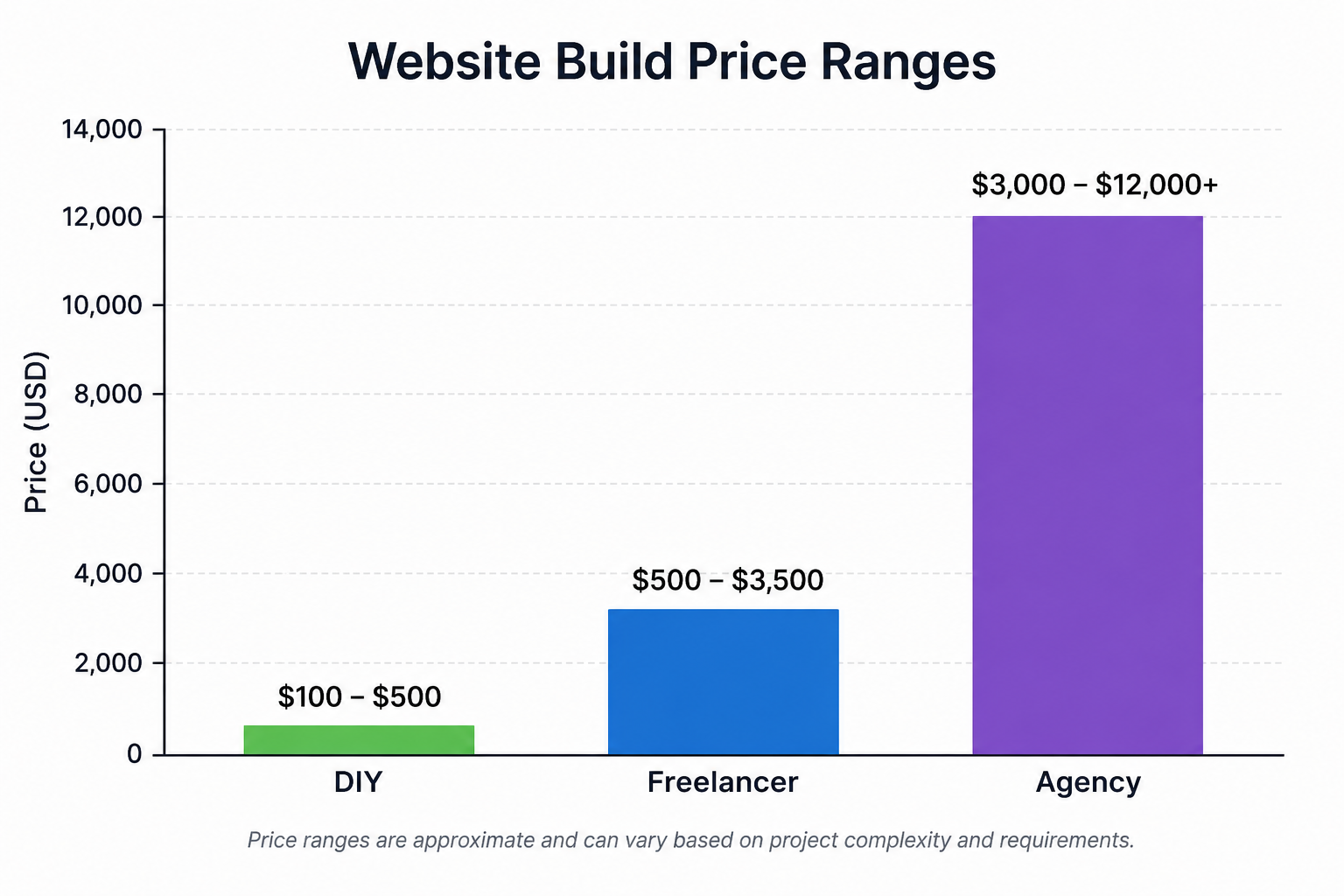
| Build Method | Upfront Cost | Ongoing Cost | Best For |
|---|---|---|---|
| DIY builder (Wix, Squarespace, Shopify) | $0–$500 | $16–$60/month | Startups, tight budgets, simple sites |
| Freelance designer | $1,500–$8,000 | $10–$50/month hosting | Custom branding, midsize sites |
| Small web agency | $6,000–$15,000 | $150–$500/month retainer | Lead generation focused businesses |
| Full service agency | $15,000–$35,000+ | Retainer varies by scope | Complex builds, ecommerce, multiple integrations |
A DIY builder gets you online fastest and cheapest, but you do all the work yourself. A freelancer costs more upfront and typically delivers a five-page brochure site in four to six weeks. An agency costs the most but bundles strategy, design, SEO, and long-term support into one relationship.
Need help scoping your project before you talk to anyone? website design services walks through what to ask for at each budget level.
What Affects the Cost of Making a Website
Not every $5,000 site and every $15,000 site look the same. A handful of factors drive most of the price gap:
- Number of pages: A 5 page site costs far less than a 20page site.
- Custom design vs. template: Custom layouts add 20- 40 hours of design work.
- Functionality: Online booking, ecommerce, or membership logins all raise the price.
- Content needs: Professional copy and photography can add $2,000 -$5,000.
- Technical setup: Analytics, CRM integration, and search tracking are standard above $10,000 but rare below $5,000.
According to a 2026 industry pricing report, design packages have climbed 8-12% year over year as buyers ask for more custom work and conversion focused features rather than settling for stock templates.
Hidden Website Making Cost Most Owners Forget
The launch invoice is rarely the last one. Ongoing costs are where budgets go wrong.
- Hosting renewals: $5–$150 per month depending on plan
- Maintenance and updates: $50–$500 per month for a managed plan
- Security monitoring and backups: often bundled into maintenance plans
- Marketing tools: email platforms, SEO software, analytics dashboards
- Redesigns: most sites need a refresh every 2–4 years
Industry pricing data suggests a $12,000 small business site with modest ongoing support can cost $23,000–$42,000 across three years once hosting, maintenance, and content updates are factored in. Budget for this from day one instead of treating it as a surprise. If your current hosting is cutting corners, compare hosting plans before you sign a new contract.
How to Choose the Right Website Cost for Your Business
There’s no universal “correct” budget. The right number depends on what the site needs to do.
- Just need an online presence? A DIY builder or a $300–$1,000 basic site covers hours, contact info, and location.
- Need to generate leads or bookings? Budget $3,000–$10,000 for a freelancer or small agency build with proper SEO.
- Selling products online? Ecommerce builds typically start at $6,000 and can climb well past $20,000 with custom integrations.
A cheap, clunky site that needs constant fixes often ends up costing more than a wellbuilt one from the start. Speed to launch also matters — a site that’s live today beats a “perfect” site that’s still in development next quarter. For a deeper breakdown of what should be included at each budget tier, see website pricing checklist.
Frequently Asked Questions
What is the average website cost for a small business in 2026?
Most small businesses pay between $2,000 and $10,000 for a professionally built site. DIY builds cost as little as $200–$800 per year, while full agency projects can reach $35,000 or more.
How much does it cost to make a website yourself?
A DIY website using a builder like Wix or Squarespace typically costs $16–$60 per month, plus $10–$20 per year for a domain. Selfhosted WordPress runs $100–$500 per year including hosting and a premium theme.
Why does website cost vary so much between providers?
Price depends on page count, custom design versus templates, added functionality like booking or ecommerce, and whether content and technical setup are included. A freelancer and a full-service agency are pricing very different scopes of work, not just labeling the same product differently.
How can I reduce website making cost without hurting quality?
Start with a clean template instead of a fully custom design, write your own first draft copy before hiring a copywriter, and choose a freelancer over an agency if your needs are simple. Avoid paying for plugins or features you won’t use in the first year.
What ongoing costs should I budget for after launch?
Plan for $1,000–$5,000 per year covering hosting, security updates, backups, and basic maintenance. Add marketing tools and periodic redesigns every 2-4 years on top of that baseline.
Website cost in 2026 isn’t a fixed number, it’s a range shaped by your build method, features, and long-term goals. A DIY builder gets you online cheaply. A freelancer or agency costs more but saves time and often performs better. Whatever path you choose, budget for the first year and the three years after it.
Ready to get a real number for your project instead of a guess?
and see what your specific business actually needs to spend.
Related Posts
E-commerce Payment Gateway Integration Guide
E-commerce Payment Gateway Integration Guide Key Takeaways Nearly 70 percent of online shopping carts get abandoned before checkout,...
Read More
webshop
July 26, 2026
The Website Redesign Process: A Step-by-Step Guide
The Website Redesign Process: A Step-by-Step Guide Key Takeaways 94 percent of first impressions about a business are...
Read More
webshop
July 25, 2026

Shopify Development Agency: 10 Questions to Ask
Shopify Development Agency: 10 Questions to Ask Key Takeaways Over 8.5 million active stores now run on Shopify,...
Read More
webshop
July 24, 2026